
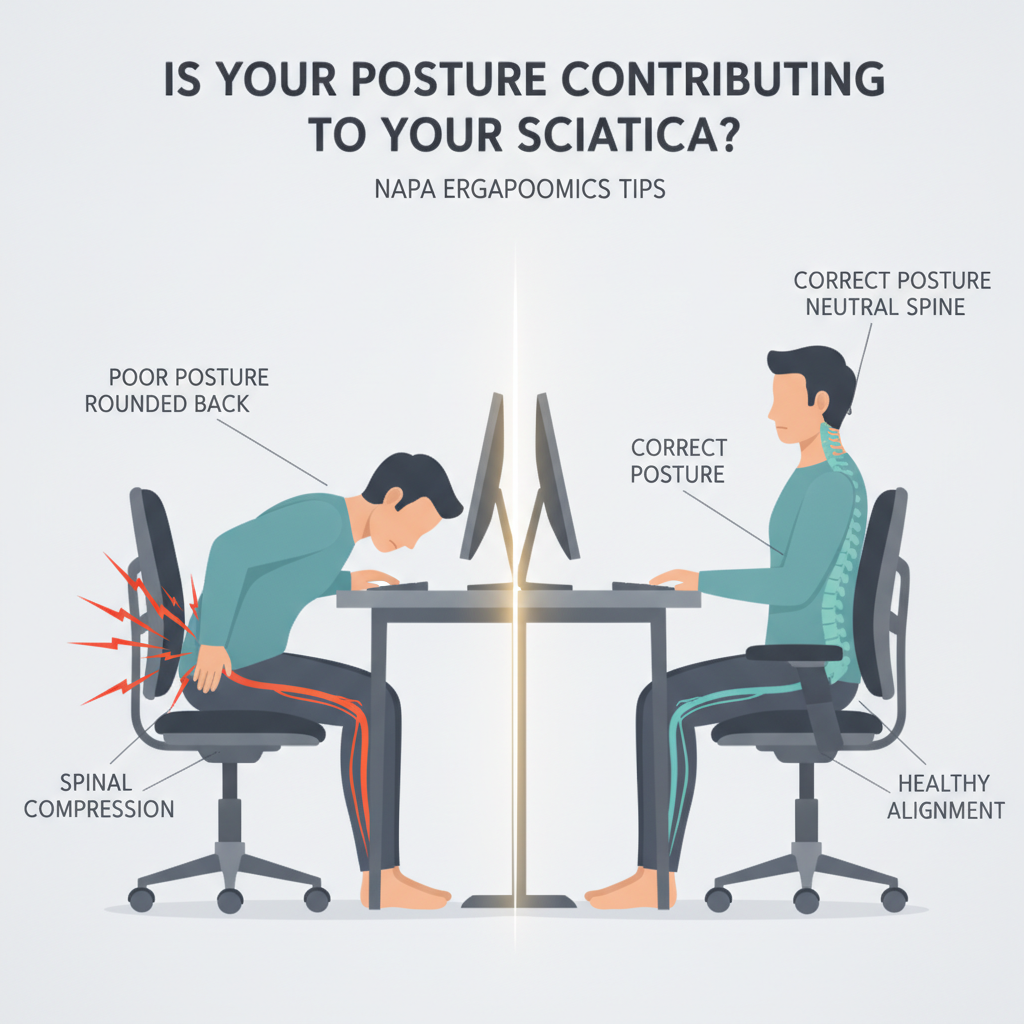
If you spend hours at your desk or on your feet, you might not realize how much your posture impacts your daily comfort and long-term health. For many small business owners, developers, and everyday residents in the area, sciatica is a nagging pain that can disrupt work and life. Understanding the connection between posture and sciatica is essential for anyone seeking sciatica pain relief Napa CA. Whether you’re troubleshooting your office setup or simply want to move through your day without discomfort, this guide will help you identify the subtle ways posture contributes to sciatic nerve pain, and offer practical ergonomic tips to ease your symptoms. Let’s explore how simple changes in how you sit, stand, and move can make a world of difference for your back, legs, and overall well-being.
How Posture Affects Sciatica Pain Relief Locally
Many people don’t realize that their everyday posture can be a driving factor behind persistent sciatic nerve pain. Sciatica, which refers to pain radiating along the sciatic nerve from the lower back down through the legs, is often aggravated by poor posture habits. In the neighborhood, where many are balancing busy work lives and family responsibilities, it’s easy to fall into unhealthy sitting or standing patterns. When you slouch at your desk, cross your legs for long periods, or hunch over your phone, you place extra pressure on your lower back and hips. This can compress the sciatic nerve, leading to pain, tingling, or numbness that disrupts your day.
Ergonomics, or the science of designing your workspace to fit your body, plays a crucial role in sciatica pain relief Napa CA. By adjusting your chair, desk, and computer monitor to support a neutral spine, you can reduce the strain on your lower back and prevent further irritation of the sciatic nerve. Simple changes, like keeping your feet flat on the floor, using a lumbar support cushion, and ensuring your screen is at eye level, can make a significant difference in how you feel at the end of the day.
For those seeking Sciatica Pain Relief in Napa, it’s important to recognize that posture is not just about sitting. Standing for long periods without shifting your weight, wearing unsupportive shoes, or carrying heavy bags on one shoulder can all contribute to sciatic pain. By becoming more mindful of your body mechanics throughout the day, you can start to break the cycle of discomfort and move toward lasting relief.
Ergonomic Strategies for Sciatica Pain Relief in Napa, CA
Creating an ergonomic workspace is one of the most effective steps you can take toward sciatica pain relief Napa CA. Whether you work from home, run a small business, or spend hours coding at a desk, the way you set up your environment matters. Start by evaluating your chair, does it provide adequate lumbar support? If not, consider adding a cushion or investing in an ergonomic chair designed to promote a healthy spinal curve. Your feet should rest flat on the floor, with your knees at a 90-degree angle and your hips slightly above your knees. This alignment helps distribute your body weight evenly and reduces pressure on the lower back.
Monitor placement is another key factor. Your screen should be at eye level, about an arm’s length away, to prevent you from leaning forward or craning your neck. Use a monitor riser or stack of books if necessary. Keyboard and mouse placement also matter, keep them close enough that your elbows remain at your sides, and your wrists stay straight while typing or clicking. These small adjustments can prevent repetitive strain and keep your posture in check throughout the workday.
Don’t forget about movement. Even with a perfect ergonomic setup, sitting or standing in one position for too long can exacerbate sciatica. Set reminders to stand up, stretch, or walk around every 30 to 60 minutes. Incorporate gentle stretches for your hamstrings, hips, and lower back to keep your muscles flexible and reduce nerve compression. By making ergonomics a daily habit, you can significantly improve your comfort and productivity while working in this community.
Posture and Sciatica Pain Relief in Napa California
Understanding the link between posture and sciatica pain relief Napa CA is crucial for anyone struggling with lower back or leg pain. Poor posture doesn’t just cause discomfort, it can actually contribute to the underlying conditions that trigger sciatic nerve irritation. When you slouch, your pelvis tilts backward, flattening the natural curve of your lower spine. This puts extra pressure on the discs and nerves in your lumbar region, increasing the risk of inflammation and pain.
For those who stand for long periods, such as retail workers or service professionals, posture is equally important. Locking your knees, leaning on one hip, or wearing unsupportive shoes can all shift your body’s alignment and aggravate the sciatic nerve. Paying attention to your stance, wearing cushioned shoes, and using anti-fatigue mats can help reduce strain and support sciatica pain relief Napa CA.
It’s also important to consider how you move throughout the day. Lifting heavy objects with a rounded back or twisting suddenly can increase your risk of sciatica flare-ups. Practice safe lifting techniques by bending at the knees, keeping your back straight, and holding objects close to your body. These mindful movements, combined with good posture, can go a long way in preventing and managing sciatic pain for residents of the region.
Common Posture Mistakes That Trigger Sciatica
Many people develop habits that unknowingly contribute to sciatic nerve pain. Some of the most common posture mistakes include slouching in your chair, crossing your legs for extended periods, and leaning forward while working on a laptop or mobile device. These positions can compress the lower spine and irritate the sciatic nerve, leading to pain that radiates down the leg. Another frequent mistake is sitting on your wallet or phone, which can tilt your pelvis and create uneven pressure on the hips and lower back.
Standing posture is just as important. People often shift their weight to one leg, stand with their knees locked, or wear shoes without adequate arch support. Over time, these habits can cause muscle imbalances and increase the risk of sciatica. Even carrying a heavy bag on one shoulder can throw off your alignment and strain your lower back. Awareness is the first step toward change, by recognizing these common mistakes, you can start to correct your posture and support sciatica pain relief Napa CA.
To break these habits, set up visual reminders at your workspace, use ergonomic accessories, and ask friends or colleagues to gently point out when you’re slouching or favoring one side. Consistent effort will help retrain your body and reduce the likelihood of sciatic pain returning.
Table: Ergonomic Adjustments for Sciatica Pain Relief
| Adjustment | Benefit | How to Implement |
|---|---|---|
| Lumbar Support | Reduces lower back strain | Use a cushion or ergonomic chair |
| Monitor Height | Prevents neck and back hunching | Raise monitor to eye level |
| Foot Position | Promotes even weight distribution | Keep feet flat on the floor |
| Keyboard and Mouse Placement | Reduces wrist and shoulder tension | Keep close to body, wrists straight |
| Frequent Movement | Prevents stiffness and nerve compression | Stand, stretch, or walk every hour |
These ergonomic adjustments are simple to implement and can provide significant relief for those experiencing sciatica pain. By making these changes part of your daily routine, you’ll support better posture and overall spinal health.
The Role of Movement in Sciatica Pain Relief Napa CA
While posture is foundational, movement is equally important for sciatica pain relief Napa CA. Staying in one position for too long, whether sitting or standing, can cause muscles to tighten and nerves to become compressed. Incorporating regular movement into your day helps keep your muscles flexible and your joints mobile, both of which are essential for reducing sciatic pain.
Try to stand up and stretch every 30 to 60 minutes. Simple movements, like walking around the office, doing gentle hamstring stretches, or performing hip openers, can relieve tension and improve circulation. If you work in a fast-paced environment, use natural breaks, such as phone calls or meetings, as opportunities to move. Even small changes, like shifting your weight from foot to foot or rolling your shoulders, can help prevent stiffness and support sciatica pain relief Napa CA.
Physical activity outside of work is also beneficial. Activities like swimming, yoga, or walking can strengthen the muscles that support your spine and reduce the risk of future flare-ups. Always listen to your body and avoid movements that cause sharp or shooting pain. If you’re unsure which exercises are safe, consult a healthcare professional familiar with sciatica pain relief Napa CA for personalized guidance.
How Stress and Fatigue Impact Posture and Sciatica
Stress and fatigue are often overlooked contributors to poor posture and sciatica pain. When you’re tired or overwhelmed, it’s easy to slump in your chair, round your shoulders, or neglect your ergonomic setup. Over time, these habits can increase pressure on your lower back and aggravate the sciatic nerve. Chronic stress can also cause muscle tension, especially in the neck, shoulders, and lower back, making it harder to maintain good posture.
To counteract these effects, prioritize self-care and stress management. Practice deep breathing, mindfulness, or short meditation sessions during the workday. Take regular breaks to stretch and reset your posture. If you notice yourself feeling fatigued, stand up, move around, or do a few gentle stretches to re-energize your body. By addressing stress and fatigue, you’ll be better equipped to maintain healthy posture and support sciatica pain relief Napa CA.
Remember, your mental and physical health are closely connected. Taking care of both can help you break the cycle of pain and improve your overall quality of life in the region.
Workplace Ergonomics for Small Business Owners and Developers
Small business owners and developers often face unique challenges when it comes to workplace ergonomics. Long hours at a desk, frequent meetings, and the demands of running a business can make it difficult to prioritize posture and movement. However, investing in ergonomic solutions can pay off in the form of increased productivity, reduced absenteeism, and improved employee well-being.
Start by conducting an ergonomic assessment of your workspace. Are desks and chairs adjustable? Is there adequate lighting to prevent eye strain? Are employees encouraged to take breaks and move throughout the day? Providing standing desks, ergonomic chairs, and monitor risers can help create a healthier environment for everyone. Encourage a culture of movement by scheduling stretch breaks, walking meetings, or team fitness challenges.
For developers, who may spend hours coding, it’s especially important to pay attention to wrist and hand positioning. Use an ergonomic keyboard and mouse, keep your wrists straight, and take regular breaks to stretch your hands and forearms. By making ergonomics a priority, you’ll support sciatica pain relief Napa CA for yourself and your team, creating a more comfortable and productive workplace in this city.
Lifestyle Changes to Support Sciatica Pain Relief Napa CA
In addition to ergonomic adjustments, certain lifestyle changes can further support sciatica pain relief Napa CA. Maintaining a healthy weight reduces the strain on your lower back and helps prevent nerve compression. Eating a balanced diet rich in anti-inflammatory foods, such as leafy greens, berries, and omega-3 fatty acids, can also reduce inflammation and promote healing.
Regular physical activity is key. Low-impact exercises like swimming, walking, or cycling strengthen the muscles that support your spine and improve flexibility. Avoid prolonged sitting or standing whenever possible, and make time for hobbies that keep you active. If you smoke, consider quitting, smoking can reduce blood flow to the spine and increase the risk of disc degeneration.
Finally, prioritize sleep. A supportive mattress and proper sleep posture can help your body recover overnight and reduce sciatic pain during the day. By making these lifestyle changes, you’ll not only support sciatica pain relief Napa CA but also improve your overall health and quality of life in the area.
When to Seek Professional Help for Sciatica Pain
While ergonomic adjustments and lifestyle changes can provide significant relief, there are times when professional help is necessary. If your sciatica pain is severe, persistent, or accompanied by symptoms like numbness, weakness, or loss of bladder control, seek medical attention immediately. A healthcare provider can perform a thorough evaluation, recommend imaging tests if needed, and develop a personalized treatment plan.
Chiropractors, physical therapists, and pain specialists can offer targeted therapies to address the underlying causes of sciatica. These may include spinal adjustments, therapeutic exercises, massage, or other modalities designed to reduce nerve compression and promote healing. In some cases, medications or minimally invasive procedures may be recommended.
Don’t wait until your pain becomes debilitating. Early intervention can prevent chronic issues and help you return to your normal activities more quickly. If you live in this community and are struggling with sciatica, reach out to a local expert for guidance on your journey to pain relief.
Key Takeaways
Sciatica pain relief Napa CA is achievable with a combination of ergonomic adjustments, posture awareness, regular movement, and healthy lifestyle choices. By understanding how posture contributes to sciatic nerve pain and taking proactive steps to improve your workspace and daily habits, you can reduce discomfort and enhance your quality of life. Remember to listen to your body, make gradual changes, and seek professional help if your symptoms persist. With the right strategies, you can move, work, and live more comfortably in the region.